

Table of Contents
- Step 1: Build Your Core Organizing Team
- Step 2: Define Your Message and Goals
- Step 3: Pick a Location, Time, and Handle Permits
- Know Your First Amendment Protest Rights
- Protest Safety and De-Escalation Tips
- Effective Protest Messaging and Apparel
- Organizing a Peaceful Demonstration Checklist
- Conclusion: Show Up, Stand Together, Wear the Message
- Frequently Asked Questions
Last Updated: October 2, 2026
Step 1: Build Your Core Organizing Team
Learning how to organize peaceful pro-democracy protests starts with people, not permits, and this guide shows you how to organize peaceful pro-democracy protests from the first planning call to the final march. A core team of five to eight trusted volunteers is enough to run a safe, effective demonstration. This guide from DOCVCARE THINK NOW protest apparel walks you through every step, from the first planning call to the final march.

Small teams move faster than big ones. Keep your first meeting tight and focused.
Roles Every Team Needs
Give every organizer one clear job. Shared roles create confusion on event day.
- Lead organizer: sets the agenda and makes final calls
- Safety lead: recruits and trains safety marshals
- Legal lead: tracks permits and knows your rights
- Media lead: handles press and social posts
- Logistics lead: manages supplies, routes, and first aid
- Outreach lead: builds coalitions with local groups
Write these roles down. Post them in your group chat so nobody guesses.
Digital Security for Organizers
Most guides skip this. Do not. Organizers are targets for doxxing and surveillance.
Use encrypted messaging for all planning. Turn on two-factor authentication everywhere. Keep a separate phone number for organizing work. Never post real-time crowd photos with visible faces.
Step 2: Define Your Message and Goals
A protest without a clear demand is just a crowd.

Pick one primary goal. "Defend free and fair elections" beats a list of ten grievances.
Then write your demand in one sentence. Example: "We demand that state officials certify every valid vote."
Test it on five people outside your group. If they cannot repeat it back, simplify it.
Set a clear end goal too.
Step 3: Pick a Location, Time, and Handle Permits
Location decides turnout, safety, and legal risk. Choose a public space with room to gather, clear exits, and transit access.
A courthouse plaza, a state capitol lawn, or a city hall sidewalk all work well. Confirm the space is genuinely public before you commit.
Time it right. Weekends draw bigger crowds. Weekday lunch hours catch office workers and press.
Permit Application Basics
Many marches and rallies on public streets require a permit. Rules vary by city, so check your local municipal regulations early.
File your permit application at least two to four weeks ahead. Include your route, start and end times, expected crowd size, and a contact person.
A permit is not permission to speak. It is a logistics agreement about space and traffic.
Know Your First Amendment Protest Rights
The First Amendment protects assembly, speech, press, and the right to petition the government. Courts have repeatedly upheld that protection in public forums, streets, sidewalks, and parks, which is where most pro-democracy demonstrations happen. But the protection is not unlimited, and knowing the edges keeps your event peaceful and your people out of custody.
What the First Amendment Actually Covers
- Public forums. Sidewalks, public parks, and plazas are traditional public forums. Speech and assembly there get the strongest protection.
- Time, place, and manner rules. Governments can impose narrow rules on when, where, and how you demonstrate, as long as the rules are content-neutral, narrowly tailored, and leave open other channels for the same message.
- No permit needed for many spontaneous gatherings. A sudden march in response to a court ruling or a legislative vote is often protected even without prior approval, though blocking traffic or emergency access is not.
- Counter-protesters have rights too. Police generally must keep the two groups separated rather than silence one side.
What to Do If Police Approach You
Stay calm, keep your hands visible, and ask one clear question: "Am I free to go?" If the answer is yes, walk away. If the answer is no, you are being detained, and the following apply:
- You may ask for the reason for the stop.
- You may refuse consent to a search of your bag or phone. Say the words out loud: "I do not consent to a search."
- You may remain silent beyond identifying yourself, in states that require identification.
- You may ask for a lawyer before answering questions.
- You may record the interaction from a safe distance. Federal courts have consistently upheld the right to record police performing public duties.
Legal Observers and the National Lawyers Guild
The National Lawyers Guild (NLG) has run a Legal Observer program for decades. Legal observers are trained volunteers, often law students and attorneys, who wear bright green hats, take notes, and document police conduct without intervening.
Request NLG legal observers through your nearest NLG chapter at least a week before a large action. If none are available, recruit your own observers and train them on the same model: observe, record, do not engage.
Jail Support Basics
Plan for the possibility that someone is arrested, even at a peaceful event.
- Collect a legal support phone number that arrestees can call from custody.
- Designate one person to track who was detained, where they were taken, and their booking number.
- Have a bond fund or a relationship with a local bail fund ready before the event, not after.
- Do not post an arrestee's name or photo on social media until they have been released and consented.
Your Rights Do Not Enforce Themselves
Rights on paper mean nothing without people willing to show up and use them. Vote for officials who respect assembly. Support local chapters of the ACLU and the National Lawyers Guild. And when you attend a demonstration, know these basics cold, because the person next to you may need you to say them out loud.
ACLU guidance on protest rights National Lawyers Guild Legal Observer program
Protest Safety and De-Escalation Tips
Safety planning is what separates a peaceful demonstration from a chaotic one. Assign a safety lead early and build a marshal team of at least one trained person per 25 to 50 attendees for a march, and one per 100 for a stationary rally.
Marshals wear bright, identifiable clothing, a single high-visibility color, agreed in advance. They watch the crowd edges, guide people away from confrontations, and stay in radio or encrypted-chat contact with the lead organizer.
De-Escalation Training and Safety Marshals
Run one short training session before the event. Twenty minutes of role-play prevents most flashpoints. Teach marshals to lower their voice, keep open body language, and physically separate people who clash.
Concrete de-escalation scripts, practice these out loud:
- To a heated participant: "I hear you. Let's step back ten feet and take a breath together."
- To a counter-protester: "You have every right to be here. We're not going to engage. Have a good day."
- To a marshal who is escalating: "Swap out. Take five. I've got this spot."
- To a crowd pressing forward: "Hands up, slow down. We hold the line here."
Key de-escalation moves:
- Step between people, not into the argument.
- Use calm, short sentences. Repeat the same phrase if needed.
- Never match an aggressive tone, even when provoked.
- Pull your own people back first. You cannot control the other side.
- Give the person a face-saving exit. "You can walk away and nothing happens."
Set a clear rule: no one engages with counter-protesters. Walk away. The march continues. If someone in your group breaks that rule, marshals escort them to the back of the crowd, not out of the movement.
Accessibility and Inclusivity Planning
A protest that excludes disabled, elderly, or low-income people is weaker, and in many cases it is also out of compliance with the Americans with Disabilities Act (ADA) when the event uses public facilities or receives public funding.
Physical access:
- Scout the route for curb cuts, flat pavement, and rest points every few blocks.
- Reserve a paved, level viewing area near the stage for wheelchair users and people with mobility aids.
- Provide seating and shade for elders and anyone who needs to sit.
- Confirm at least one accessible portable restroom is on site.
Sensory and cognitive access:
- Designate a quiet, low-sensory zone away from speakers and drums, with seating and water.
- Publish a simple visual schedule of the event in advance.
- Avoid strobe lights, sudden sirens, and air horns near the crowd.
- Print materials in large type and offer a plain-language version of the demands.
Communication access:
- Book an ASL interpreter for speeches and announce it in advance so Deaf attendees know to come.
- Caption any livestream.
- Use microphones with a clear PA, do not rely on crowd repetition alone.
Economic access:
- Choose a transit-accessible location and share transit routes in the event invite.
- Offer free water and snacks when possible.
- Never require paid apparel, tickets, or donations to participate.
Use inclusive messaging in every speech and sign. Solidarity means everyone, including the people who are usually left at the curb.
Effective Protest Messaging and Apparel
Your message lives or dies by visibility. Signs, banners, and clothing all carry it.
Keep sign text short. Six words or fewer read best on camera. High contrast beats fancy design.
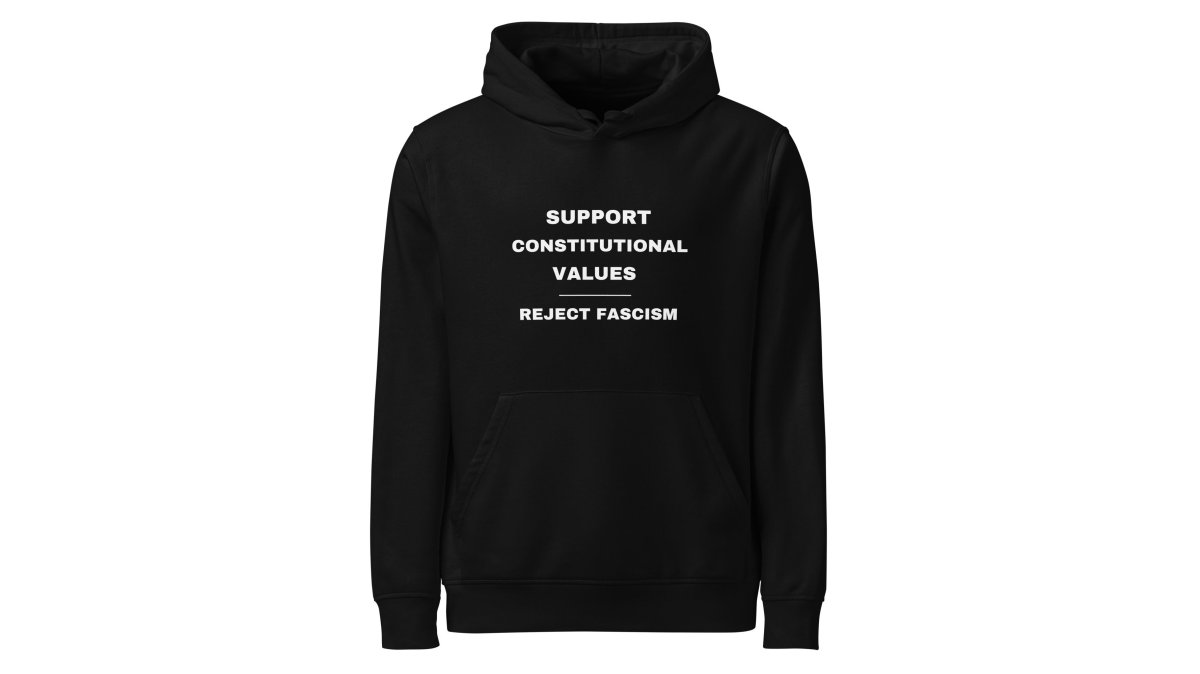
Apparel matters for long days outdoors. You want comfortable, visible statement clothing that survives a full march and the laundry afterward. DOCVCARE THINK NOW protest apparel makes original slogan designs on premium Gildan, Champion, and Bella+Canvas blanks, including the Unisex Organic Mid-Weight Hoodie and the Think Now Premium Hoodie. Unisex fits work across body types, so your whole chapter can match.
A statement shirt also works off the march route. Wear it to work, on campus, or around town.
Organizing a Peaceful Demonstration Checklist
Use this checklist in the final week. It keeps the whole plan in one place.
- Core team roles assigned and confirmed
- Message and demand written in one sentence
- Location scouted and permit filed
- Safety marshals recruited and trained
- Legal observers confirmed
- First aid station and supplies arranged
- Accessibility plan shared with attendees
- Press release sent to local media
- Social media campaign scheduled
- Emergency contact list distributed
- Signs, banners, and apparel ready
- Digital security check completed
Assign one person to own each line. Unassigned items get dropped.
Conclusion: Show Up, Stand Together, Wear the Message
Organizing a peaceful pro-democracy protest takes planning, but it does not take a big budget or a big name.
You now have the full playbook: build the team, secure the plan, protect your people, and show up.
DOCVCARE THINK NOW protest apparel exists for exactly this moment.
Get started with DOCVCARE THINK NOW protest apparel and wear the message everywhere you go.
Frequently Asked Questions
What is the 3.5% rule for protests?
Political scientist Erica Chenoweth found that no government has successfully resisted a campaign once 3.5% of the population actively participated. In the U.S., that's roughly 11 million people. The rule matters because it shows sustained, peaceful participation across a broad population is more effective than isolated large marches. Organizers use it to argue for ongoing grassroots organizing, not one-off events.
What are the legal rights of protesters under the First Amendment?
The First Amendment protects your right to assemble peacefully and speak freely in public spaces. You can protest on public sidewalks, parks, and plazas without a permit in many cases. You do not need to answer questions about your citizenship or where you're going. You have the right to record police in public. Permits may be required for large gatherings, marches that block streets, or events using amplified sound. Know your rights before you go.
What are must-haves for a peaceful protest?
Bring water, snacks, sunscreen, a charged phone, and any necessary medication. Wear comfortable shoes and layered clothing. Carry a bandana in case of tear gas (though it won't fully protect you). Bring a sign or wear a statement shirt. Have a buddy system and a pre-agreed meeting point. Write key phone numbers on your arm in case your phone dies. Know your legal observer contacts and emergency numbers.
How do you ensure a protest remains peaceful and effective?
Train safety marshals in de-escalation before the event. Set clear nonviolence commitments in your organizing meetings. Brief participants on the plan, the message, and what to do if tensions rise. Have legal observers present. Coordinate with local authorities on permits and routes. Keep the message focused on pro-democracy goals. After the event, debrief with your team and document what worked for next time.
