

How to Prevent Hoodies from Pilling: A Full Guide

Table of Contents
- Why Hoodies Pill in the First Place
- How to Wash Hoodies to Keep Them Soft
- Best Laundry Practices for Hoodies
- Drying Methods That Prevent Pilling
- Fabric-Specific Care: What Your Hoodie Is Made Of Matters
- How to Remove Pilling from Hoodies Without Causing Damage
- Storage and Ongoing Maintenance to Prevent Hoodies from Pilling
- Conclusion
Last Updated: August 18, 2026
Why Hoodies Pill in the First Place
Fabric pilling results from a specific mechanical process that happens to almost every fabric under the right conditions. Those small, fuzzy balls form when loose or broken fibers tangle together on the surface, a process driven by friction and abrasion.
The Role of Friction and Abrasion in Fiber Breakage
Pilling begins when fabric rubs against itself, seat backs, bag straps, or your arms during wear, causing individual fibers to weaken and break free from the yarn structure. These loose fibers entangle with neighboring fibers through fiber entanglement, and static electricity holds the resulting pill in place on the surface.
The laundry cycle accelerates this dramatically. Mechanical action inside a washer, especially in a top-loading machine, generates intense friction as garments tumble against each other and the drum. Short fiber lengths are the biggest risk factor, fabrics made from shorter fibers break apart faster under abrasion than those made from longer, more tightly twisted fibers.
How Fleece Lining and Knit Structure Affect Pilling
Most hoodies have a knit structure on the outside and a fleece lining on the inside. That fleece lining is highly susceptible to pilling because it's made from loose, brushed fibers intentionally raised to create softness, exactly the kind that break free under friction.
Looser knits have more space between yarns, allowing fibers to migrate to the surface more easily. Tighter knit constructions resist pilling longer. Synthetic fibers like polyester are particularly prone to pilling because they're strong enough not to shed entirely but weak enough at the fiber level to break and cling. Natural fibers like cotton tend to shed pills more readily, so pilling is less persistent.
How to Wash Hoodies to Keep Them Soft
A hoodie's fleece lining and knit structure require a gentler approach at every stage of the wash cycle. Getting this right is the most direct way to keep them soft and extend garment longevity.
Water Temperature and Cycle Selection
A cold water wash is the single most protective setting you can choose. Hot water weakens fiber bonds, causes shrinkage in natural fibers, and accelerates the breakdown that leads to pilling.
The delicate or gentle cycle uses slower agitation and shorter wash times, meaning less friction. Unless your hoodie is visibly soiled, a gentle cycle with cold water will clean it without unnecessary wear and tear.
Detergent, Fabric Softener, and Load Size
Using too much detergent leaves residue that builds up in fabric fibers over time, making them stiffer and more brittle. Brittle fibers break faster under friction. Use a small amount of mild detergent designed for delicates or wool.
Fabric softener coats fibers with a lubricating layer that reduces friction during washing, but regular use can reduce absorbency and cause fiber buildup that worsens pilling. Use it occasionally rather than every wash.
Overcrowding the washer means garments compress and grind against each other throughout the cycle. A smaller load gives each garment space, reduces abrasion, and produces a gentler wash.
Best Laundry Practices for Hoodies
Turning Your Hoodie Inside Out
Turn your hoodie inside out before every wash. This protects the outer surface from direct contact with other garments and the drum during the wash cycle. The fleece lining takes the friction instead, while the visible exterior stays cleaner and smoother for far longer.
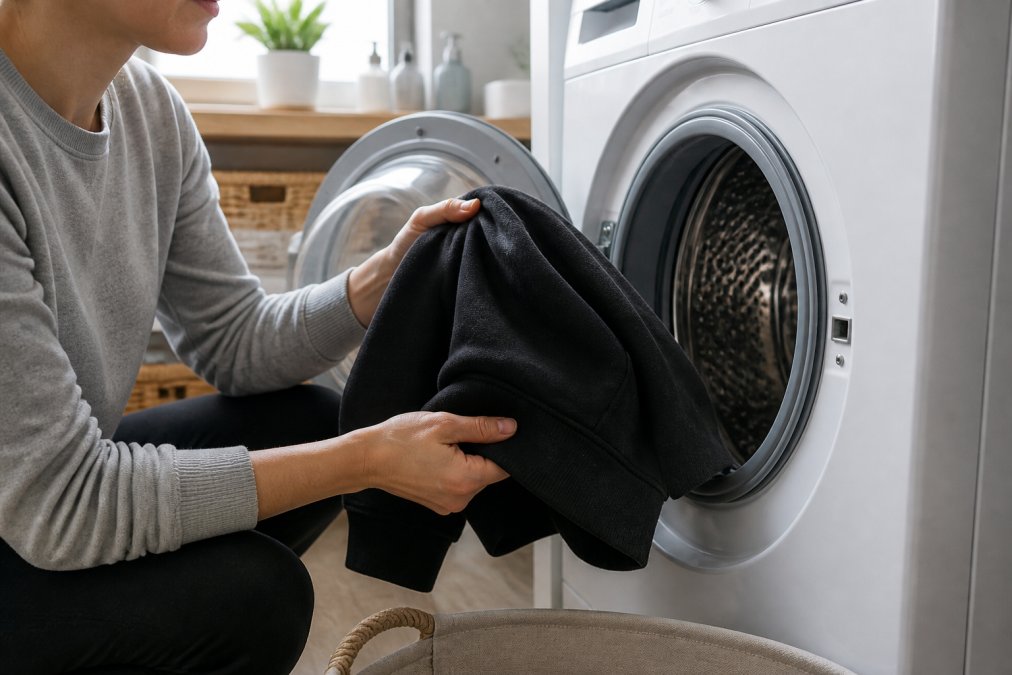
This also protects printed graphics and surface texture from fading and cracking.
Using a Mesh Wash Bag
Place your hoodie inside a large mesh laundry bag before washing. The bag acts as a physical barrier that limits how much the garment can move and rub against other items. It also prevents zippers, buttons, and rough seams from other garments from snagging the hoodie's knit structure.
According to textile care guidance from the American Cleaning Institute, separating laundry by fabric type and texture is one of the most effective ways to extend garment life.
Drying Methods That Prevent Pilling
High heat in a tumble dryer weakens fiber structure and causes synthetic fibers to contract unevenly, loosening the knit structure and allowing more fibers to migrate to the surface. Air dry your hoodie flat on a clean surface or over a drying rack.
Flat drying is preferable to hanging because hanging a wet hoodie stretches the knit structure under the weight of water, distorting the shape over time.
If you must use a dryer, use the lowest heat setting and remove the hoodie while still slightly damp. Finish drying it flat. The FTC Care Label Rule guidelines for textile care require manufacturers to provide tested care instructions; checking your hoodie's label will tell you exactly what the fabric can handle.
Avoid high heat settings entirely for hoodies with synthetic fleece lining. Polyester fleece can melt at high dryer temperatures, permanently damaging the fiber structure.
Fabric-Specific Care: What Your Hoodie Is Made Of Matters
Cotton hoodies are generally more forgiving than synthetic blends. Cotton fibers are natural and longer, resisting fiber entanglement better than polyester. However, 100% cotton hoodies are prone to shrinkage in warm water and the dryer. Cold water wash and air drying are essential.
Polyester and polyester-blend hoodies pill faster because synthetic fibers are strong enough to resist shedding but prone to breaking at the surface level. These hoodies benefit most from mesh wash bags, gentle cycles, and cold water washes.
Cotton-polyester blends are the most common construction. The care approach is the same as for pure polyester: cold water, gentle cycle, inside out, mesh bag, low heat or air dry.
Fleece-lined hoodies of any fiber composition need the most careful handling. The brushed interior should never be exposed to high heat or aggressive agitation.
| Fabric Type | Wash Temperature | Cycle | Drying Method | Pilling Risk |
|---|---|---|---|---|
| 100% Cotton | Cold | Gentle | Air dry flat | Moderate |
| 100% Polyester | Cold | Delicate | Low heat or air dry | High |
| Cotton-Poly Blend | Cold | Gentle | Low heat or air dry | Moderate-High |
| Fleece-Lined (any) | Cold | Delicate | Air dry flat | High |
Knowing exactly what your garment is made from and following the care instructions for that specific fiber is the most direct way to protect your investment.
How to Remove Pilling from Hoodies Without Causing Damage
Even with perfect laundry habits, some pilling will eventually occur on any knit garment. Existing pills can be removed without causing further damage using the right tools and technique.
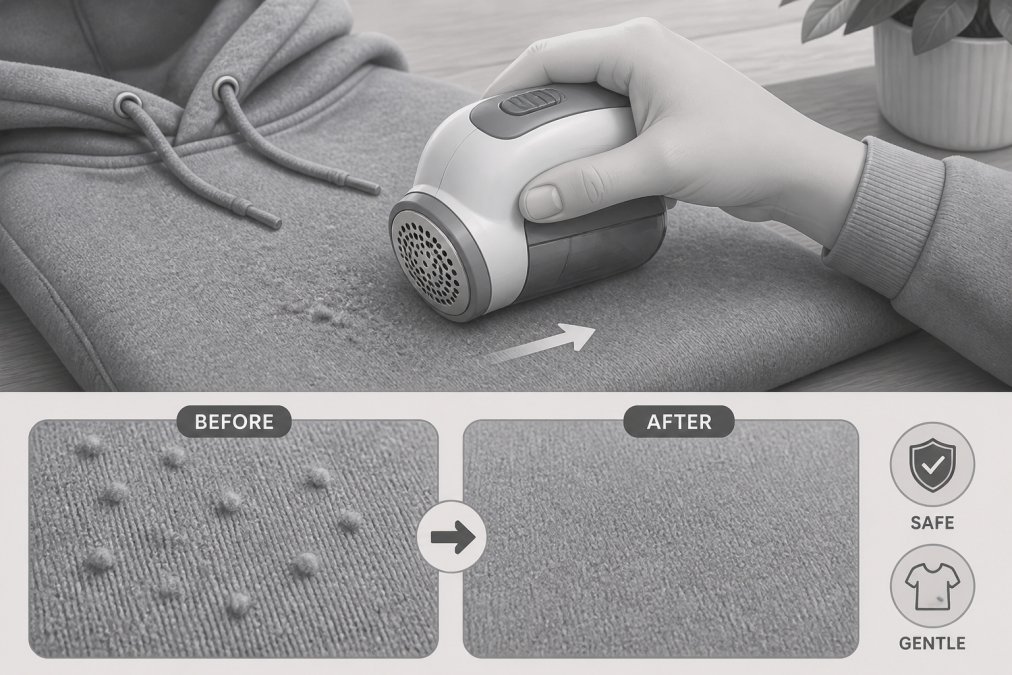
Never pull pills off by hand, as this tears fibers and creates new loose ends that will form more pills. Always use a purpose-built removal tool.
Fabric Shavers: Mechanical Removal
A fabric shaver is a small electric or battery-powered device with a rotating blade protected by a mesh guard. The mesh catches pills while the blade cuts them cleanly from the surface.
Lay the hoodie flat on a firm surface, hold the fabric taut with one hand, and move the shaver in slow, even strokes across the pilled area. Do not press hard; let the device do the work. Pressing too firmly can cut into the fabric itself. Work in sections and empty the lint compartment regularly.
According to consumer textile care advice from the Textile Care Allied Trades Association, using a sharp, well-maintained fabric shaver is the recommended method for pill removal on knitwear.
Chemical and Adhesive Options
Lint rollers and adhesive tape are useful for surface lint but are not effective for true pills. For very light pilling on delicate fabrics, a fine-tooth sweater comb can work as a gentler alternative, drawing the comb across the fabric in one direction only with light pressure.
There are no effective chemical treatments for removing existing pills. Products marketed as "fabric refreshers" may reduce static electricity, helping prevent new pills from forming, but they will not remove pills that have already developed.
Storage and Ongoing Maintenance to Prevent Hoodies from Pilling
Fold hoodies rather than hanging them for long-term storage. Hanging knit garments causes the fabric to stretch under its own weight, distorting the knit structure and stressing fibers at the shoulder points.
Avoid storing hoodies compressed under heavy items. Sustained pressure between wears can cause fiber entanglement, particularly in fleece-lined garments.
Between washes, spot clean minor marks rather than running a full laundry cycle unnecessarily. Every wash cycle generates friction and mechanical action. Reducing wash frequency by spot cleaning and airing garments out directly reduces cumulative abrasion.
For long-term storage, a breathable cotton garment bag protects the surface from dust and incidental abrasion while allowing airflow. Avoid plastic bags, which trap humidity and can cause fiber degradation.
Rotating between multiple hoodies rather than wearing the same one every day extends the life of each garment. Fibers need time to recover their structure between wears.
For a complete overview of fabric care best practices, the ASTM International textile care standards provide detailed guidance on how different fiber types respond to washing, drying, and storage conditions.
Pilling is not inevitable; it results from specific, preventable conditions applied repeatedly over time. The DOCVCARE THINK NOW hoodie collection is crafted for daily wear and lasting comfort. Turn it inside out, use a mesh wash bag, wash cold on a gentle cycle, and air dry flat. Those four habits alone will dramatically extend how long your hoodie stays soft, pill-free, and worth wearing. Get started with DOCVCARE THINK NOW and experience the difference that mindfully made fabric and smart daily care can make.
Frequently Asked Questions
Does pilling mean my hoodie is poor quality?
Not necessarily. Pilling is a natural result of friction and fiber breakage during wear and washing, and it can happen to both budget and premium garments. That said, hoodies made with tightly knit, longer-staple fibers and quality construction tend to pill far less over time. Fabric composition, yarn quality, and how you care for the garment all play a bigger role in pilling than price alone.
Can you prevent pilling by changing how you wash clothes?
Yes, washing habits are one of the biggest factors in how to prevent hoodies from pilling. Using a cold water wash on a gentle or delicate cycle, turning the hoodie inside out, placing it in a mesh wash bag, and avoiding overcrowding the wash load all reduce the mechanical action that causes fiber entanglement. Air drying instead of tumble drying also cuts down significantly on abrasion.
Does pilling ever stop on its own?
It can slow down. During the first several washes, loose surface fibers shed and tangle into pills. Once those shorter, weaker fibers are gone, pilling often becomes less frequent. However, ongoing friction from wear and repeated laundry cycles can continue to create new pills, especially on high-contact areas like the underarms and cuffs. Consistent care habits keep it manageable long-term.
How do you remove pilling from a hoodie without damaging it?
A fabric shaver is the safest mechanical option for removing pilling from hoodies. Hold the garment taut on a flat surface and move the shaver in slow, light passes to lift pills without cutting into the fabric. For smaller areas, a fine-tooth sweater comb works well. Avoid disposable razors, which can snag and thin the fabric. After removing pills, wash the hoodie on a gentle cycle to clear any loose lint.
This article was written using GrandRanker