

Is Organic Cotton Political Apparel Worth It in 2026?

Table of Contents
- Verdict: Who Organic Cotton Political Apparel Is Worth It For
- How We Evaluated Organic Cotton Political Apparel
- Sustainability and Ethical Manufacturing Behind Sustainable Protest Apparel
- Durability of Organic Cotton Tees and Hoodies Under Repeated Washing
- Made in USA Apparel: What Independent Political Shops Get Right
- Cost-Per-Wear: Pricing Breakdown of Organic Political Apparel
- Where Organic Cotton Falls Short: Microplastics, End-of-Life, and Trade-Offs
- Conclusion: What to Do Before the Next March
- Frequently Asked Questions
Last Updated: September 11, 2026
Verdict: Who Organic Cotton Political Apparel Is Worth It For
The answer depends on how you wear your politics. If you march, canvass, and show up repeatedly, organic cotton political apparel is worth it because the fabric outlasts the message. If you buy one shirt for a single event and never touch it again, conventional cotton does the same job for less.
At DOCVCARE THINK NOW, we print original resistance slogans on premium Gildan, Champion, and Bella+Canvas blanks, so the question of whether organic cotton political apparel justifies its price is one we answer with our own order book. Here is who should pay the premium, and who should not.

Worth it for: marchers and organizers who wear the same piece weekly, people with sensitive skin, and anyone who wants a statement garment that survives a full election cycle.
Not worth it for: one-off event buyers, anyone who needs a costume by Friday, and shoppers who never check how a blank was grown.
Below, we break down durability, cost-per-wear, and the trade-offs most guides skip.
How We Evaluated Organic Cotton Political Apparel
We judged each factor by what actually changes after twenty washes, not by what a hangtag claims. Fabric longevity, print integrity, fiber integrity, and end-of-life all carry more weight than a certification logo.
Our criteria, in order of importance:
- Print durability. Does the slogan crack, fade, or peel after repeated laundering?
- Fiber integrity. Does the cotton hold its shape, or does it pill and thin?
- Skin comfort. Does the fabric cause irritation during a long day outdoors?
- Supply chain transparency. Can the maker name the blank and the mill?
- End-of-life. Will the garment biodegrade, or shed microplastics for decades?
Certification matters here. The Global Organic Textile Standard sets the fiber and processing requirements a garment must meet before it can carry a GOTS certified label, and that standard covers chemical residues, wastewater, and ethical labor conditions together.
A common mistake is treating every "organic" claim as equal. It is not.
Sustainability and Ethical Manufacturing Behind Sustainable Protest Apparel
Sustainable protest apparel starts with conventional cotton's biggest problem: how it is grown. Conventional cotton relies on pesticide-heavy farming that degrades soil health and consumes enormous water usage, while organic farming substitutes crop rotation and natural pest control.
The environmental footprint difference shows up at the field level, not the shelf. Organic cotton is grown pesticide-free, which protects farmworkers and nearby communities from toxic chemicals that conventional agriculture applies routinely. That matters for the people who grow the shirt, not just the person wearing it.

Ethical labor is the second half of the equation. A GOTS certified supply chain requires documented fair trade practices and safe working conditions at every stage of textile manufacturing, from ginning to finishing. Without that chain of custody, "sustainable" is a marketing word.
For political apparel specifically, this is not abstract. If your shirt says something about justice, the supply chain behind it should not contradict the message.
Durability of Organic Cotton Tees and Hoodies Under Repeated Washing
Organic cotton tees and hoodies generally hold up as well as, or better than, conventional cotton under repeated washing, but only when two things line up: a quality blank and a print method that actually bonds to the fiber. Fiber length is the first mechanism. Organic cotton is typically processed without the harsh chemical stripping that shortens and weakens conventional fibers, so the staple length stays longer. Longer staples mean fewer fiber ends poking out of the yarn, which is what causes pilling, thinning, and that worn-out look after a season of marches.

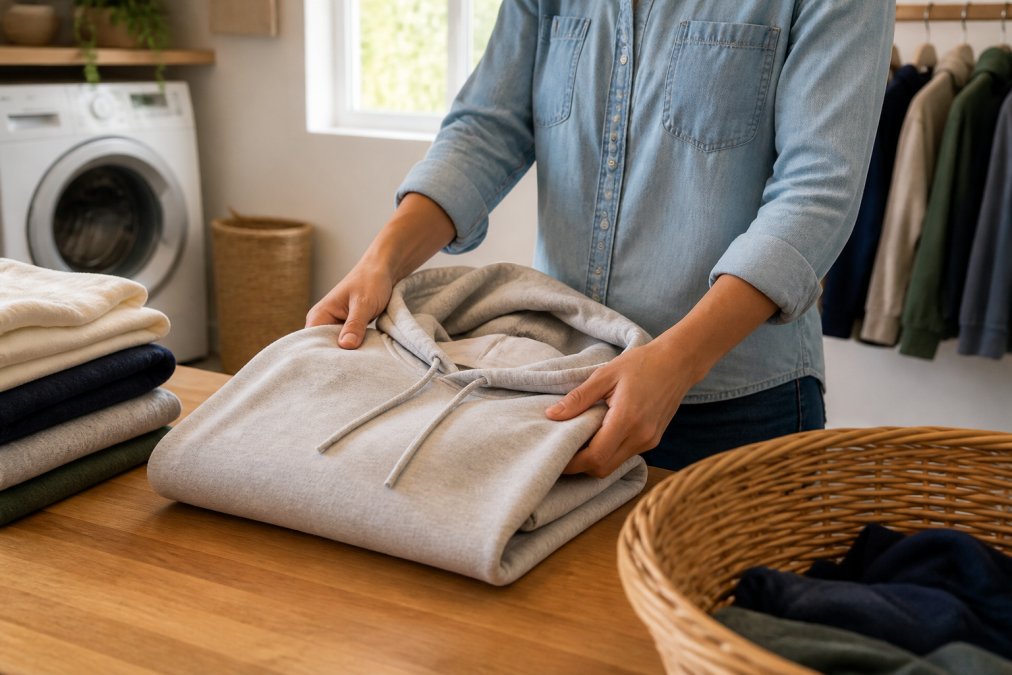
The second mechanism is print method, and this is where most guides stop short. A political slogan is a graphic under stress. Three print methods dominate the merch world, and they age very differently on cotton:
- Screen printing. Plastisol or water-based ink is pushed through a mesh screen and cured into the fabric. On a tightly woven organic cotton blank, a properly cured screen print flexes with the garment and resists cracking for years. This is the most durable option for bold slogan graphics.
- Direct-to-garment (DTG). Ink is jetted onto the shirt and cured. DTG works well on 100% cotton but tends to fade faster on blends and can look washed-out after 30-50 washes depending on the pretreat and ink load.
- Heat transfer / vinyl. A plastic film is pressed onto the surface. It sits on top of the fabric rather than bonding into it, so it peels at the edges first, usually within a year of regular washing.
The practical takeaway: fiber holds the ink; the ink does not hold itself. A screen-printed slogan on a tightly woven organic blank will outlast the same slogan heat-transferred onto a thin synthetic blend, even if the blend costs less up front.
What actually kills a political tee is not the cotton, it is heat and agitation. Hot water, a hot dryer, and washing the garment right-side out all accelerate cracking and shrinkage. A march shirt gets worn hard: sweat, sunscreen, repeated wash cycles, and folding into a bag. Garment construction decides whether it comes out of that intact.
A realistic benchmark most practitioners use: a well-made organic cotton tee with a screen-printed slogan, washed cold and air-dried, will hold its print and shape through roughly 50-75 wears before noticeable fading. A heat-transfer print on a cheap blend often shows edge peeling inside 15-20 washes. That gap is the whole durability argument in one number.
For organizers buying in batches, this matters beyond one shirt. A consistent print run on the same blank means every member of your chapter gets the same lifespan out of the garment, which is what makes a coordinated wardrobe of protest apparel actually function as a wardrobe rather than a drawer of one-off event shirts.
Made in USA Apparel: What Independent Political Shops Get Right
Made in USA apparel production is not automatically better, but independent political shops tend to get two things right that mass-market merch operations miss: blank selection and design ownership. An owner-run shop chooses the blank by hand and prints its own original slogans rather than reselling marketplace clip art.
That distinction shows up in transparency. When you buy from an independent maker, you can usually ask which blank was used and get a straight answer. DOCVCARE THINK NOW prints on premium Gildan, Champion, and Bella+Canvas blanks for exactly this reason: the message should last as long as the shirt does.
Shop the resistance collection →
The trade-off is scale. Independent shops cannot match the volume pricing of a large drop-ship storefront, and they do not pretend to. What they offer instead is accountability: a real person stands behind the design and the garment.
For chapter organizers buying in batches, that accountability matters. You want a consistent print run and a maker who answers the phone, not a faceless storefront that ships a different blank every time.
Cost-Per-Wear: Pricing Breakdown of Organic Political Apparel
Cost-per-wear is the honest way to compare premium apparel against cheap merch. Divide the price by the number of times you actually wear the garment. A cheap shirt worn twice costs more per wear than a quality piece worn fifty times.
Here is how the DOCVCARE THINK NOW lineup breaks down:
| Garment | Price | Best For | Print Surface |
|---|---|---|---|
| Unisex organic raglan sweatshirt | $55.00 | Layering at cool-weather marches | 100% organic cotton |
| Unisex organic sweatshirt | $64.00 | Everyday wear, campus, canvassing | Organic cotton fleece |
| Unisex Hoodie | $64.00 | Long outdoor days, evening events | Mid-weight organic cotton |
| Think Now Premium Hoodie | $68.00 | Cold-weather organizing | Cotton-blend fleece |
| Classic Comfort Hoodie | $68.00 | Fitted streetwear look | Ring-spun cotton blend |
Run the math before you decide. A $64 hoodie worn once a week for a year works out to roughly $1.23 per wear. A $20 shirt that fades after three washes costs more than that per outing.
The Federal Trade Commission's guidance on environmental marketing claims is worth reading before you trust any sustainability label, because it defines what a maker can and cannot legally claim about recycled and organic content.
Where Organic Cotton Falls Short: Microplastics, End-of-Life, and Trade-Offs
Organic cotton is not a perfect material, and pretending otherwise weakens the case for it. Three limits matter for political apparel buyers, and the third is one almost no competing guide addresses.
Microplastic shedding. Organic cotton itself does not shed microplastics, because it is a natural cellulose fiber. The problem is blends. A 50/50 cotton-polyester hoodie releases plastic microfibers every time it is washed, a single synthetic-blend garment can shed hundreds of thousands of microfibers per wash cycle, and those fibers pass through most wastewater treatment plants into rivers and oceans. If avoiding microplastic shedding is your priority, choose a 100% organic cotton piece over a blend and accept the different feel and drape. Pure cotton wrinkles more and dries slower, but it does not contribute to the microfiber load.
End-of-life. Pure organic cotton is biodegradable under the right conditions, soil bacteria and fungi break the cellulose down and return carbon and nutrients to the ground. But biodegradability is not automatic. It depends on what was done to the fiber after it was grown. Conventional cotton dyed with heavy metal-based dyes and finished with formaldehyde resins or PFAS-based stain repellents can persist in a landfill for years because those treatments resist microbial breakdown (the EPA). A GOTS certified garment restricts the dye and finish chemistry allowed, which is why the certification matters for end-of-life, not just for the field. Blended fabrics are the worst case: polyester and cotton cannot be easily separated, so the garment biodegrades far more slowly and the plastic portion never fully goes away.
This is the strongest argument for all-cotton, GOTS certified construction in statement apparel. A shirt that says something about the future should not become permanent landfill waste.
The dye and finish question. Here is the gap most guides skip. "Organic" refers to how the cotton was grown, not how it was dyed, printed, or finished. A garment can carry organic fiber and still be dyed with azo compounds or finished with a synthetic softener that undermines the end-of-life benefit. GOTS closes that gap by regulating the entire processing chain, chemical inputs, wastewater treatment, and the dyes and finishes that touch the fiber. If biodegradability is part of why you are paying the premium, the certification is what actually delivers it.
Cost and availability. Organic cotton costs more to grow and process, and that premium lands on the price tag. There is no way around it, and any brand claiming otherwise is cutting a corner somewhere, usually on certification, dye chemistry, or labor documentation.
For political apparel specifically, this is not abstract. If your shirt says something about justice, the supply chain and the end-of-life behind it should not contradict the message. Ask the maker which blank they print on, whether it is GOTS certified, and what happens to the garment when you are done with it. The answers tell you whether the slogan is a statement or a costume.
Conclusion: What to Do Before the Next March
The gap between a shirt you wear once and a shirt you wear for years is the whole decision. Organic cotton political apparel is worth it when the garment becomes part of your routine, not a costume you pull out for one event. Check the certification, check the blank, and run the cost-per-wear math on your own wardrobe.
DOCVCARE THINK NOW exists for the people who show up repeatedly. Every piece carries an original resistance slogan, printed on premium Gildan, Champion, and Bella+Canvas blanks with unisex sizing across hoodies, sweatshirts, and tees, from an independent, owner-run shop that answers for its own designs. Wear the message where it counts: at the march, on campus, at work, around town.
Shop the resistance collection and get a garment that outlasts the news cycle.
Frequently Asked Questions
What are the downsides of organic cotton fabric?
Organic cotton costs more to grow because it skips synthetic pesticides and fertilizers, and yields are lower, so garments carry a higher price tag. It also wrinkles more easily than cotton-polyester blends and can shrink if you wash it hot. Pure organic cotton holds up well over time, but it needs cold washing and air drying to keep its shape. For political apparel you wear to marches repeatedly, those care habits are worth building.
Is organic cotton apparel more durable than standard cotton blends?
It depends on construction as much as fiber. Organic cotton fibers are often longer and stronger because they are not broken down by harsh chemical processing, and they resist pilling better than short-staple conventional cotton. Blends with polyester add abrasion resistance for high-wear areas. What matters most for political apparel is stitch quality, print method, and fabric weight. A well-built organic tee outlasts a cheap blended one across repeated wash cycles.
How does sustainable protest apparel support pro-democracy movements?
Every purchase is a signal. Buying sustainable protest apparel from an independent, owner-run shop keeps money inside the movement instead of routing it to a mass-market merch operation with no stake in the cause. The garment itself does work too: a visible slogan starts conversations at marches, on campus, and at work. When you wear the message, you are doing the organizing, and the shirt is your tool.
Does organic cotton hold up better for long-term political activism?
For people who wear the same statement piece to every march, rally, and canvass day, organic cotton's longer fibers and tighter weave resist the pilling and thinning that wear out cheaper fabrics. Cold washing and air drying extend the life further. The print matters just as much: a screen-printed slogan on a quality blank survives dozens of washes, while heat-transfer prints on thin blanks crack within a season.
What should I look for when buying ethical political apparel?
Check three things. First, fiber: GOTS certified organic cotton means pesticide-free growing and no toxic chemical residues in the finished fabric. Second, construction: double-stitched seams, ribbed cuffs, and a print method that survives the laundry. Third, who you are buying from: an independent, owner-run shop with original slogans keeps your money in the movement. Ask about shipping timelines before a march date and confirm the return policy for sizing.