

Best Print Quality for Hoodies: A 2026 Buyer's Guide

Table of Contents
- Why Print Quality Determines If Your Message Lasts
- Best Fabric Blend for Hoodie Printing: Cotton vs. Polyester
- Screen Printing vs DTG for Hoodies: Which Wins?
- The Hidden Enemy: Dye Migration and Fibrillation
- How to Prevent Hoodies from Pilling and Keep Prints Sharp
- What to Look for in a Print-on-Demand Partner
- Our Hoodies: Built for the Long Fight
- Conclusion: Wear Your Message Loud and Clear
- Frequently Asked Questions
Last Updated: September 7, 2026
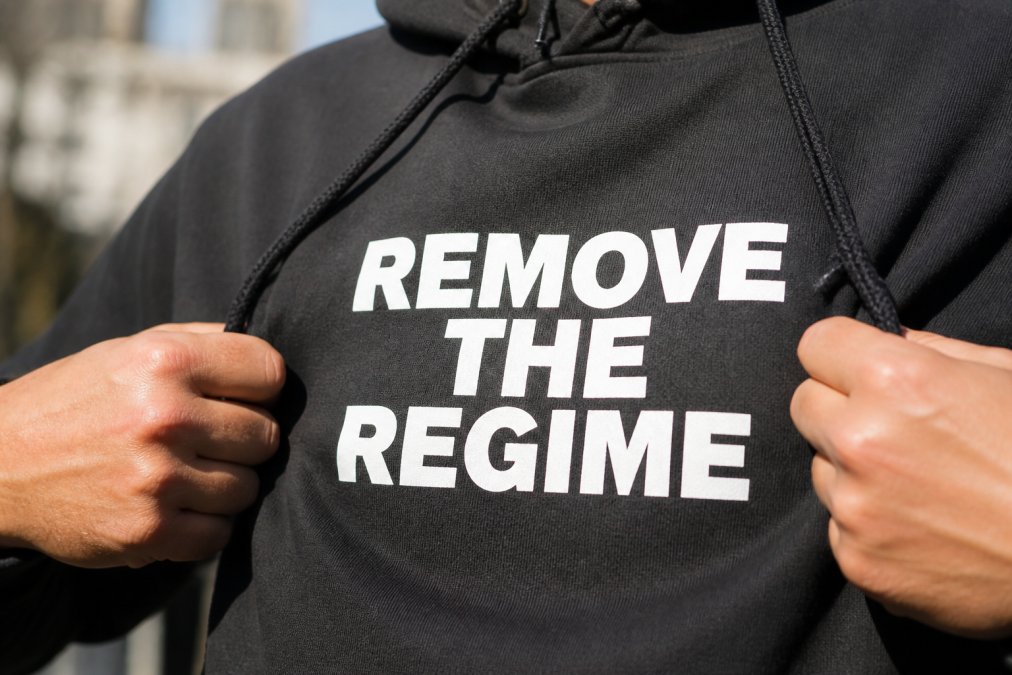
A hoodie that falls apart after three washes isn't a statement; it's a disappointment. When you wear your politics on your chest, the best print quality for hoodies determines whether your message survives the march, the laundry, and the next election cycle. At DOCVCARE THINK NOW protest apparel, we print original resistance slogans on premium blanks because a faded, cracked design undermines everything you stand for.
Most people assume any hoodie will hold up to printing. That assumption is wrong. The real difference comes down to three things: the fabric blend, the printing method, and the weight of the material.
Why Print Quality Determines If Your Message Lasts
Your hoodie is a billboard for your beliefs. A crisp, vibrant print signals that you're serious and organized. A cracked, peeling design signals the opposite. Print quality isn't vanity; it's credibility.
The stakes are higher for political apparel than for a band tee or a sports jersey. You're not just wearing a logo; you're making a public declaration about democracy, rule of law, and resistance. When that declaration fades into illegibility, it undermines the very message you're trying to amplify. Consumer research on apparel durability expectations shows that most buyers expect decorated garments to survive at least 20 wash cycles without significant degradation. Anything less is a failed product.
Best Fabric Blend for Hoodie Printing: Cotton vs. Polyester
Cotton is the gold standard for print quality. Its natural fibers absorb ink deeply, creating a vibrant, durable bond. Ring-spun cotton offers a smoother surface for sharper detail and better ink adhesion.
Polyester, by contrast, is the troublemaker. Synthetic fibers don't absorb ink the way cotton does. The higher the cotton content, the better your print will look and last. For most political statement hoodies, a 50% cotton, 50% polyester fleece is a solid compromise.
Understanding GSM and Fabric Weight
GSM, or grams per square meter, measures fabric weight. It's the single most important number to understand when choosing a hoodie for printing. Heavier fabrics provide a smoother surface and hold up better to repeated washing.
For hoodies, you'll typically see GSM ranging from 240 to 320. A mid-weight hoodie around 271 GSM offers warmth without bulk. Heavier options, like a 305 GSM Champion hoodie, hold their shape better. Lighter fabrics under 240 GSM may not provide a flat enough surface for crisp prints.
Screen Printing vs DTG for Hoodies: Which Wins?
Screen printing is the traditional champion for hoodies. It forces thick layers of ink through a mesh stencil onto the fabric, creating a durable design that can outlast the garment itself. For bold, single-color slogans, it delivers unbeatable opacity and longevity.
Direct-to-garment, or DTG, sprays water-based inks onto the surface. DTG excels at complex, multi-colored designs. However, on heavy fleece hoodies, DTG ink can sit on the surface rather than bonding deeply, making it more prone to cracking.
| Printing Method | Best For | Durability | Detail Level | Cost Efficiency |
|---|---|---|---|---|
| Screen Printing | Bold slogans, simple graphics | Excellent, thick ink layer | Limited color separation | High for bulk orders |
| DTG | Complex, colorful designs | Good, but surface-level on fleece | Photographic detail | High for one-offs |
| Embroidery | Logos, small accents | Exceptional, thread won't crack | No fine detail | Premium cost |
For a political slogan that needs to remain legible after dozens of washes, screen printing is the clear winner. It's why we choose it for our bold, single-color resistance designs.
The Hidden Enemy: Dye Migration and Fibrillation
Two technical failures ruin more hoodie prints than anything else: dye migration and fibrillation. Understanding the chemistry is the difference between a slogan that stays sharp and one that turns into a muddy blur.
Dye Migration: The Ghost of Polyester Past
Dye migration occurs when dye molecules in a polyester or high-polyester-blend fabric become energized by heat and sublimate into a gas. These molecules travel into the ink layers. When the fabric cools, the migrated dye becomes trapped in the print, causing a visible halo or discoloration around the edges of your design.
The primary trigger is heat. This can happen during printing if the curing oven runs too hot, but more commonly it happens in the dryer. A standard household dryer can reach 135°F to 150°F, enough to start sublimation on low-quality polyester. This is why a print that looks perfect can develop a ghostly shadow after its first trip through the dryer.
How to prevent it:
- Choose the right blank: The most effective prevention is to avoid 100% polyester hoodies entirely. A 50/50 cotton-polyester blend, especially one from a reputable mill like those used by Gildan or Champion, uses solution-dyed or high-energy dyes that are far more stable and resistant to sublimation.
- Wash cold, dry low: Cold water washing and air drying or using the lowest heat setting on your dryer dramatically reduces the energy available to drive dye migration.
- Print with a barrier: Some professional printers use a special 'blockout' or 'underbase' layer of ink that acts as a physical barrier between the fabric dye and the top print layer. This is a standard technique for printing on dark or performance fabrics.
Fibrillation: The Fuzzy Foe of Print Detail
Fibrillation is where the individual micro-fibers of a yarn break loose from the fabric's surface due to abrasion, creating a fuzzy layer. On a printed area, this fuzz sits on top of your ink, scattering light and making your design look faded, even though the ink itself is intact.
This is a particular problem with carded, open-end spun yarns, which have shorter fibers prone to breaking loose. Ring-spun cotton uses longer fibers twisted tighter, creating a smoother surface that resists fibrillation. A tight, dense knit will fibrillate far less than a loose, open knit.
How to prevent it:
- Start with a smooth face: Look for hoodies that specify 'ring-spun cotton' or a 'smooth face' fleece. The 305 GSM Champion hoodie we use is a prime example of a dense, tight-knit face that resists fuzzing.
- Wash inside out: Turning the hoodie inside out before washing protects the printed surface from the direct abrasion of the drum and other garments.
- Avoid fabric softeners: Fabric softeners coat the fibers and can weaken the yarn structure, ironically increasing the likelihood of fibrillation over time. They can also leave a residue on the print that dulls its appearance.
Troubleshooting: Why Your Print Failed
If you're holding a hoodie with a degraded print, run through this quick diagnostic checklist:
Shop the resistance collection →
- Is there a discolored halo around the design? This is almost certainly dye migration. The blank's dye is unstable. Stop using that blank for light-colored prints.
- Does the print look faded but the surface feels smooth? Check for fibrillation. Run your hand over the printed area. If it feels slightly fuzzy or 'brushed,' the fabric's fibers are clouding the ink. The print may be fine underneath.
- Is the print cracking or peeling? This points to an ink adhesion or flexibility issue, often from over-curing or using a stiff ink on a stretchy fabric. This is a printing process problem, not a fabric problem.
- Are there small, unprinted dots or 'pinholes'? This can happen on textured fleece where the print screen doesn't make full contact with the uneven surface. A higher mesh count or a thicker ink deposit can help.
By understanding these mechanisms, you can make an informed choice about the blank and the printer, ensuring your message isn't undermined by invisible chemistry. The right hoodie, printed correctly, is a durable billboard for your beliefs, one that will still be crisp and legible at the next march, the next rally, and the next election.
How to Prevent Hoodies from Pilling and Keep Prints Sharp
Pilling is the formation of those tiny, unsightly balls of fiber on the surface of your hoodie. While pilling is a fabric issue, it directly impacts print quality by creating an uneven surface that catches the light and obscures your design. Textile industry guidance on pilling resistance notes that fabric construction and fiber content are the primary determinants of a garment's resistance to pilling.
Prevention starts with the blank. Look for hoodies made from long-staple, ring-spun cotton, which has fewer loose fiber ends to tangle into pills. A 50/50 cotton-poly blend with a tight knit is more resistant to pilling than a loose fleece.
Washing habits play a role as well. Turn your hoodie inside out before washing to reduce friction on the printed surface. Wash in cold water and hang it to dry. Heat and friction accelerate both pilling and print degradation.
What to Look for in a Print-on-Demand Partner
Choosing a print-on-demand partner is a decision about your message's future. The cheapest option is rarely the best when your slogan needs to survive the long fight. A partner who understands fabric chemistry and print mechanics is worth their weight in gold; one who just pushes orders through a machine will undermine your message.
The Technical Vetting Checklist
When you're evaluating a print partner, don't just ask about their catalog. Ask these specific, technical questions to gauge their expertise:
- What is your policy on dye migration for dark or poly-blend blanks? A knowledgeable partner will immediately discuss their underbase strategy, curing temperatures, and ink selection. A vague answer like 'we haven't had issues' is a red flag.
- What mesh count do you use for your screens? For a bold, single-color slogan on a hoodie, a lower mesh count (like 110-156) deposits a thicker layer of ink, which is crucial for opacity and durability. A partner who only uses high mesh counts might be optimizing for detail, not longevity.
- How do you handle the 'platen' for hoodies? Printing on a hoodie's uneven surface, with its central seam, pockets, and zippers, requires specialized platens (the board the garment sits on) to create a flat printing surface. Ask if they use a 'platen' specifically designed for hoodies to avoid print distortion around the center seam.
- What is your process for testing washability? Do they have a documented wash-testing protocol? Do they test their prints on the specific blanks they sell? A partner who can't show you wash-test data is guessing.
- What is your defect rate and return policy? A partner who stands behind their work with a clear return policy on cracking, fading, or peeling is a partner who is confident in their process. Be wary of partners who blame the blank or the washing machine.
The Sample Wash Test: Your Ultimate Vetting Tool
The Political Imperative for Quality
For a political organization, a low-quality print isn't just a bad product; it's a strategic failure. When you hand out hoodies at a rally, you're distributing a piece of your message. A hoodie that fades after a few washes tells the world your organization isn't built to last.
A high-quality print, on the other hand, is a long-term investment in your movement's visibility. When someone wears your hoodie for years and it still looks sharp, they become a walking billboard for your cause.
Beyond the Print: The Blank is the Message
The print is only half the story. The blank hoodie itself is a statement about your values. A hoodie made in a sweatshop contradicts a message of justice. Look for partners who are transparent about their supply chain.
- Ask about certifications: Does the blank have GOTS (Global Organic Textile Standard) certification for organic cotton? Does it use recycled polyester? These certifications are verifiable, third-party audits that back up sustainability claims.
- Ask about the mill: A reputable partner will know exactly which mill produced their blanks. They should be able to tell you if it's a Gildan, Champion, Bella+Canvas, or another named manufacturer, not just 'a supplier.'
- Ask about labor practices: While harder to verify, a partner who is proud of their ethical sourcing will be happy to discuss it. A partner who is evasive is a red flag.
By vetting your partner on both the technical print process and the ethics of their supply chain, you ensure your hoodie is a true reflection of your values.
Our Hoodies: Built for the Long Fight
We built DOCVCARE THINK NOW protest apparel on a simple principle: the message should last as long as the fight. That's why every hoodie we sell is a premium blank from trusted brands like Gildan, Champion, and Bella+Canvas.
[Our Premium Champion Pullover Hoodie](https://docvcarethinknow.com/products/unisex-champion-hoodie) is a prime example. It's a 9 oz./yd² (305 g/m²) 50% cotton, 50% polyester fleece that offers a dense, smooth printing surface. This is a hoodie engineered for longevity, available at $63.00.

For those who prefer a mid-weight option, our Unisex Organic Mid-Weight Hoodie at $64.00 is crafted from high-quality organic cotton. It's a more sustainable choice that doesn't sacrifice print quality, offering a soft, breathable feel while supporting eco-friendly practices.

Conclusion: Wear Your Message Loud and Clear
The best print quality for hoodies comes down to informed choices: high cotton content, appropriate GSM, and a printing method that matches your design. Don't let a cheap blank mute your message. Your voice matters, and what you wear should amplify it.
We're an independent, owner-run shop, not a faceless drop-ship storefront. When you wear our designs, you're supporting a maker who shares your commitment to democracy and rule of law. Guidance on responsible apparel manufacturing reinforces that consumers deserve honest, durable products. Shop the resistance collection and get a hoodie that will still be making a statement when the next election comes around.
Frequently Asked Questions
What type of print is best for hoodies?
For hoodies with bold, single-color text or simple graphics, screen printing offers the best durability and color vibrancy. For highly detailed, multi-colored designs, direct-to-garment (DTG) printing is superior. The best print quality for hoodies comes from matching the method to your design. A brand using premium blanks, like our Champion hoodie, ensures the print has a smooth surface to adhere to, reducing cracking and fading.
Which fabric blend offers the best print quality for hoodies?
A cotton-polyester blend, typically 50% cotton and 50% polyester, offers the best balance for hoodie printing. The cotton fibers provide a smooth, absorbent surface that inks and dyes bond with well, while the polyester adds durability and helps the garment retain its shape. This blend minimizes issues like dye migration and excessive shrinkage, making it the best fabric blend for hoodie printing.
How do I ensure my custom hoodie designs don't crack or fade?
To prevent cracking and fading, start with a high-quality blank hoodie with a smooth, tight-knit surface. Wash your hoodie inside out in cold water and tumble dry on low. Avoid using fabric softeners, which can break down print fibers. Choosing screen printing for simple designs and proper curing during manufacturing are the most critical steps for long-lasting print quality.
Why does garment weight matter for print quality?
Garment weight, measured in GSM (grams per square meter), matters because heavier fabrics have a tighter, denser weave. This creates a smoother printing surface, preventing ink from bleeding or being absorbed unevenly. A mid-weight hoodie around 270-300 GSM, like our Think Now Premium Hoodie, provides enough structure for a sharp, vibrant print without feeling stiff or bulky.