

Table of Contents
- Why Durable Protest Apparel Matters for Long-Duration Marches
- What to Bring to a Protest March: Essential Gear Checklist
- Choosing Fabric That Resists Shrinking and Fading
- Best Protest Clothing for Comfort During Extended Activism
- Tips for First-Time Protesters: Apparel and Preparation
- Layering Systems for Weather and Climate Variation
- Maintaining and Repairing Your Protest Gear
- Sustainable and Ethical Sourcing of Activist Apparel
- Frequently Asked Questions
Last Updated: September 22, 2026
Why Durable Protest Apparel Matters for Long-Duration Marches
You're standing in the street for six hours. Your shirt is soaked. The print on your chest, the message you came to share, is cracking and peeling. By the time you get home, the design is barely readable.
Durable protest apparel is essential. When you're marching for democracy, rule of law, and the right to assemble, you want the message to survive repeated wears and washes.
DOCVCARE THINK NOW builds garments for repeat activists. Premium blanks from Gildan, Champion, and Bella+Canvas, reinforced stitching, and prints designed to resist cracking and fading through repeated washes and sun exposure.
What to Bring to a Protest March: Essential Gear Checklist
Core apparel items
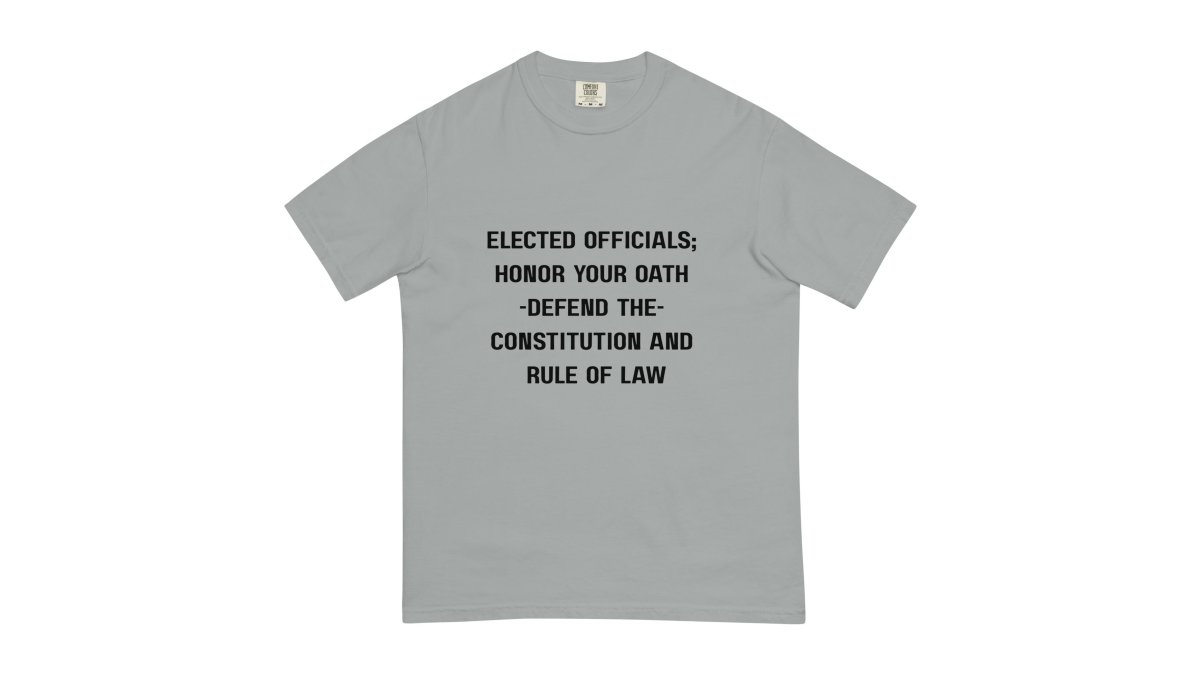
A heavyweight t-shirt is your foundation. Look for garment-dyed options, the dye penetrates the fiber, so fading is minimal even after dozens of washes. The DOCVCARE THINK NOW unisex garment-dyed heavyweight t-shirt ($40) uses dense cotton that resists shrinking and holds its shape through long marches and repeated laundering.

A long-sleeve shirt protects your arms from sun exposure and adds layering flexibility. Breathable fabric prevents overheating while staying sturdy enough for a full day of movement.
A sweatshirt or hoodie is essential for temperature shifts. Marches start early. Weather changes. A heavyweight sweatshirt like the DOCVCARE THINK NOW Champion sweatshirt ($64) gives you warmth without bulk, and the ribbed cuffs and hem keep the fit locked in after multiple washes.
Core apparel checklist:
- One heavyweight t-shirt (primary message layer)
- One long-sleeve shirt (sun protection, layering)
- One sweatshirt or hoodie (temperature regulation)
- One backup shirt (in case the first gets damaged)
Protection and comfort accessories
Comfortable socks prevent blisters during hours on your feet. Comfortable socks prevent blisters during hours on your feet. Pack two pairs.
A cap or hat shields your face from sun and protects your printed message from UV exposure, which slows fading.
Gloves (if it's cold) protect your hands and maintain flexibility. Choose breathable materials to prevent overheating.
A backpack or bag carries water, snacks, a phone charger, and extra layers. Choose padded straps to prevent shoulder strain.
Accessories checklist:
- Two pairs of comfortable socks
- A cap or wide-brimmed hat
- Gloves (if temperature is below 50°F)
- A comfortable backpack with padded straps
- A water bottle (reusable, durable)
Choosing Fabric That Resists Shrinking and Fading
Garment-dyed cotton is the gold standard for activist apparel. Dye applied after sewing penetrates deep into fibers, resisting fading through repeated sun exposure and washing.
Piece-dyed fabrics fade faster because color sits on the surface rather than within the fiber.
Heavyweight cotton blends (80% cotton, 20% polyester) resist shrinking better than 100% cotton. Polyester stabilizes fabric structure, preventing dimensional changes. True heavyweight shirts weigh at least 6 ounces per square yard.
Air-jet spun yarn reduces pilling and surface damage. When yarn is spun using air jets instead of traditional spindles, the fibers are more tightly bound, so they don't separate and ball up on the surface after washing. The DOCVCARE THINK NOW unisex sweatshirt with air-jet spun construction ($55) uses this process to maintain a clean appearance through dozens of wears.
Fabric selection matters:
- Garment-dyed fabrics fade slower than piece-dyed
- Heavyweight cotton (6+ ounces per square yard) holds shape better
- Cotton blends resist shrinking more than 100% cotton
- Air-jet spun yarn prevents pilling and surface damage
Best Protest Clothing for Comfort During Extended Activism
Breathable, moisture-wicking materials
You're moving for hours. If your apparel traps moisture, you'll overheat and your shirt will stick to your skin, restricting movement.
Breathable fabrics pull moisture away from your skin so sweat evaporates, keeping your core temperature stable and preventing chafing.
Cotton breathes naturally. Polyester blends add durability without sacrificing breathability.
Look for loose weaves that let air pass through. A 5.5 to 6-ounce shirt breathes well enough for movement while holding up through repeated marches.
Ergonomic design for movement and visibility
Unisex fits work better than gender-fitted cuts. They give room in shoulders and chest without excess fabric at the waist, allowing free arm movement and preventing riding up. Fitted cuts restrict movement and wear out faster.
Raglan sleeves or dropped shoulders reduce stress on shoulder seams by distributing load across a wider area.
Reinforced stitching at stress points, underarms, shoulders, neckline, adds years to garment life. Double-stitched seams resist splitting.
Length matters. Look for a length that hits mid-hip when standing still. When you raise your arms, the shirt should stay tucked in or not expose your midriff.
Visibility is tactical. Bright colors make you visible in crowds for safety and message amplification. All-black apparel provides anonymity. Whatever color you choose, ensure the print is high-contrast so it reads from a distance.
Design features that improve durability and comfort:
- Unisex fits allow full range of motion
- Raglan or dropped shoulders reduce seam stress
- Double or triple-stitched seams resist splitting
- Reinforced necklines and underarms extend garment life
- Mid-hip length prevents riding up or dragging
Tips for First-Time Protesters: Apparel and Preparation
Start with one quality piece. Buy one heavyweight, garment-dyed shirt from a maker who uses premium blanks. Wear it, wash it, and learn what durability feels like.
Test your apparel before the march. Wear your shirt for a full day of activity. Check if it rides up, if the print cracks at seams, or if you overheat. A march is not the time to discover fit problems.
Layer strategically. Start with a lightweight base layer, add your message shirt, add a sweatshirt if cold. Remove layers as you warm up. Wear comfortable socks; wet cotton causes blisters.
Bring a backup shirt. If your primary shirt gets torn or the print gets damaged, you still have a message to wear. Keep it in your backpack.
Wear broken-in shoes. New shoes cause blisters. A march is not the time to break in footwear. Wear shoes you've walked in for at least two weeks.
Know what you're marching for. You're showing up because you believe in democracy, due process, and the rule of law. The shirt amplifies that message. Wear it with intention.
First-time protester preparation:
- Buy one quality shirt, not multiple cheap ones
- Test your apparel before the march
- Layer for temperature changes
- Pack a backup shirt and extra socks
- Wear broken-in shoes only
- Know your position and what you're defending
Layering Systems for Weather and Climate Variation
Cold weather layering (below 50°F): Start with a lightweight base layer that wicks moisture. Add your message shirt, then a heavyweight sweatshirt or hoodie. Add a jacket if it drops below 35°F. Use appropriate materials for base layers; they dry faster and keep you warm even when wet.

Moderate weather layering (50-70°F): Your message shirt alone is usually enough.
Rain and moisture:
Layering by temperature:
- Below 50°F: base layer + message shirt + sweatshirt + jacket
- 50-70°F: message shirt + optional lightweight overshirt
- Above 70°F: message shirt + sun protection layer + cap
- Rain: lightweight jacket over message shirt
Maintaining and Repairing Your Protest Gear
You bought durable apparel. Now keep it durable.
Washing extends garment life. Wash in cold water, not hot. Hot water breaks down fibers faster and fades dyes. Turn the shirt inside out before washing so the print faces inward and experiences less friction. Use a gentle detergent, avoid bleach and fabric softeners.
Maintenance practices that extend garment life:
- Wash in cold water, inside out
- Air dry instead of using a machine dryer
- Repair small damage immediately
- Store on wooden hangers away from direct sunlight
- Retire garments when damage becomes extensive
Sustainable and Ethical Sourcing of Activist Apparel
When you buy protest apparel, you're funding resistance. Know where your money goes.
Sustainable and ethical sourcing:
- Buy from independent makers who reinvest profits
- Choose premium blanks over budget alternatives
- Ask about labor practices and manufacturing transparency
- Prioritize durability, longer-lasting apparel means less waste
- Support original messaging over mass-market designs
Frequently Asked Questions
What fabrics prevent durable protest apparel from cracking or fading after multiple washes?
Heavyweight cotton blends and garment-dyed fabrics resist fading better than standard tees. Look for air-jet spun yarn construction, which reduces pilling and maintains color vibrancy through repeated washing. Premium blanks from manufacturers like Champion and Bella+Canvas hold prints longer because the base fabric is thicker and more tightly woven. Garment-dyed pieces improve with wear, the color actually deepens rather than fading. Store your apparel away from direct sunlight and wash in cold water to extend the life of both the fabric and the printed message.
How should you dress for a long-duration protest march to stay comfortable?
Wear breathable, moisture-wicking base layers under a durable outer shirt or hoodie. Choose apparel with ergonomic design that allows full range of motion, avoid tight fits or restrictive sleeves. Layer strategically so you can adjust to temperature changes; a heavyweight long-sleeve shirt works as both a standalone piece and a layer under a sweatshirt. Wear sturdy, broken-in footwear with good arch support. Your outfit should be something you've worn before, not brand new, so your body knows how it moves in that gear.
What should first-time protesters avoid wearing to a march?
Avoid brand-new shoes that haven't been broken in, blisters will end your day. Don't wear loose jewelry, long scarves, or anything that could catch or get grabbed. Don't wear anything you can't afford to lose or get stained. Avoid overly bright colors if anonymity matters to you, or wear all-black apparel if that's your choice for the demonstration. Don't overdress for the weather; you'll heat up quickly once you're moving with the crowd. Finally, avoid messaging or symbols that contradict your actual position, your apparel should authentically represent your beliefs.
Are independent protest apparel makers different from drop-ship resellers?
Yes. Independent makers like DOCVCARE THINK NOW create original designs and print them on premium blanks they source directly. Drop-shippers typically use generic clip art and print on lower-quality blanks, then mark up the price. With independent makers, you know exactly where your money goes, into better materials, original messaging, and supporting the actual business owner. You can ask questions about fabric sourcing, print durability, and sizing. Independent apparel also carries the maker's actual vision and commitment to the cause, not just marketplace profit.
