

5 Ways to Protect Your Rights During a Protest

Table of Contents
- Know Your First Amendment Rights Before You Show Up
- What to Do If Arrested at a Protest: Stay Calm and Stay Silent
- How to Document Police Interactions Without Escalating
- Digital Privacy for Protesters: Lock Down Your Phone
- 5. Wear the Message That Protects You
- Your Rights Are Only Real When You Use Them
- Frequently Asked Questions
Last Updated: September 9, 2026
Knowing how to protect your rights during a protest is about being prepared. The First Amendment protects your right to assemble peaceably, but law enforcement has procedures that can test that protection. This guide from DOCVCARE THINK NOW protest apparel breaks down five concrete ways to protect your rights during a protest, from knowing what to say to an officer to locking down your phone, so you can show up and make your voice heard without handing the state an easy advantage.

Protecting your legal rights and your physical safety are the same project. A calm, prepared protester is harder to intimidate, harder to arrest on flimsy grounds, and harder to silence. Below are the five strategies that legal observers and civil liberties organizations consistently recommend, including what most guides get wrong: that silence is often your best defense, and that your clothing can be a legal tool.
Know Your First Amendment Rights Before You Show Up
The First Amendment protects your right to peacefully assemble and to speak freely, but that protection is not absolute. You can be arrested for blocking traffic, trespassing on private property, or engaging in violence, and police can lawfully order a crowd to disperse if they declare an unlawful assembly. Understanding the boundaries of your rights is the first step to protecting them, because you cannot assert a right you do not know you have.
The American Civil Liberties Union publishes clear guidance on what to do if you believe your rights have been violated, which is worth reading before you go out. In practice, your speech is most protected in traditional public forums like streets, sidewalks, and parks, and you have the right to photograph and record police officers performing their duties in public spaces, as long as you do not interfere.
But knowing the current rules is only half the story. The rights you exercise in the street were won in the courtroom, and the boundaries of those rights are constantly being tested and redrawn. The Supreme Court's ruling in Shuttlesworth v. City of Birmingham (1969) struck down an ordinance that gave city officials unbridled discretion to deny parade permits, establishing that the government cannot require a permit simply because it dislikes the message. More recently, in Nieves v. Bartlett (2019), the Court held that probable cause for an arrest generally defeats a First Amendment retaliatory-arrest claim, but it left open a narrow exception for situations where officers arrest someone for speech that is protected and that no reasonable officer would consider a crime. That exception matters, because it means a retaliatory arrest for protected speech can still be challenged when the probable cause is weak or pretextual.
This legal landscape is not static. In the wake of the 2020 George Floyd protests, the Department of Justice under Attorney General William Barr deployed federal officers to Portland, Oregon, and Lafayette Square in Washington, D.C., using tactics that included tear gas and rubber bullets. A federal judge in Oregon later ruled the officers had exceeded their authority by arresting protesters without probable cause, and the Ninth Circuit upheld that ruling in 2022. The law is not self-executing; it requires people who know their rights and courts willing to enforce them.
Your rights are not a gift from the state; they are a claim you assert. Those who marched in Birmingham, sat in at lunch counters across the South, and filled the National Mall were active participants in a struggle that continues today. When you show up, you are helping to define those boundaries for the next person who takes the street.
What to Do If Arrested at a Protest: Stay Calm and Stay Silent
If you are arrested, the single most important thing you can do to protect your rights is to invoke your right to remain silent and your right to an attorney immediately. Anything you say to police can and will be used against you, and the adrenaline of the moment can lead you to talk yourself into a worse position. State clearly that you are exercising your right to remain silent and that you want a lawyer, then stop talking.
Rehearse this scenario mentally before it happens. Do not resist arrest, even if you believe it is unlawful, because resisting adds a new charge and escalates physical risk. Keep your hands visible, remember that booking can take hours, and do not sign anything without your attorney present.
How to Document Police Interactions Without Escalating
Recording police interactions is a powerful tool for accountability and your legal right in public spaces, but how you record matters. Hold your phone at chest height to keep your hands visible, and announce that you are recording, because many officers will stop questionable behavior once on camera. Keep a safe distance and do not intervene physically; your role is to be a witness.
To document police interactions effectively, you need to capture the essentials: the officer's badge number and patrol car number, the time and location, and a clear view of any force used. The U.S. Department of Justice guidance on recording police confirms that bystanders have a First Amendment right to record officers performing official duties in public spaces. Upload your footage to a secure cloud service as soon as possible, because phones are often seized or damaged during arrests, and consider sharing it with a legal observer or a civil liberties organization.
Digital Privacy for Protesters: Lock Down Your Phone
Your phone is a treasure trove of information about your location, contacts, and political activity, so treat it as potential evidence before you leave the house. The most effective step is to leave it at home or use a burner phone with no personal data. If you must bring it, enable a strong passcode, disable biometric unlocking, and turn off lock-screen notifications.
Before you go, back up your data and then sign out of all your accounts, because a signed-in account gives law enforcement a pathway to your cloud data. The Electronic Frontier Foundation's protest surveillance guide details how police use cell-site simulators and data warrants to track protesters, which is why airplane mode is your friend when you are not actively using your phone. Turn off location services, disable Bluetooth and Wi-Fi scanning, and consider using a messaging app with end-to-end encryption for any planning conversations.
5. Wear the Message That Protects You
Your clothing is more than a statement of solidarity; it is a practical tool for safety and legal protection. Bright, high-visibility colors make you easier for legal observers to spot, while a hat or hoodie with a clear slogan identifies you as part of a peaceful, organized action.
Shop the resistance collection →
The message you wear is also a form of speech with its own legal history. The Supreme Court has long recognized clothing as expressive conduct protected by the First Amendment. In Tinker v. Des Moines Independent Community School District (1969), the Court upheld students' right to wear black armbands to protest the Vietnam War. In Minnesota Voters Alliance v. Mansky (2019), it struck down a law banning political apparel at polling places for its vague standard. What you wear is not just a fashion choice; it is a legal act.
The psychology of visual protest matters. High-contrast combinations like black on yellow or white on red are more legible at a distance and more likely to be captured clearly on camera. A message legible from fifty feet away can be seen by news helicopters, legal observers, and the officer deciding whether to escalate. The iconic "I AM A MAN" signs from the 1968 Memphis sanitation workers' strike worked because they were simple, bold, and unambiguous.
The transition to digital protest media has amplified the importance of visual design. A sign that works on the street may not work on a screen, so activists increasingly create digital graphics and templates that can be shared in seconds. The Black Lives Matter movement, the Women's March, and the climate strikes relied on physical signs and digital graphics that reinforced each other. When you design your sign or choose your shirt, think about how it will look in a photograph, because the image will outlive the protest.
DOCVCARE THINK NOW protest apparel makes political-expression clothing designed for exactly this purpose, with original resistance slogans printed on premium Gildan, Champion, and Bella+Canvas blanks that survive the laundry and the long days outdoors. The message on your chest does the talking before you say a word, which matters when the smartest thing you can do is stay silent, and the unisex fits work for marches, campus, and the office. A DOCVCARE THINK NOW Premium Unisex Hoodie keeps you warm through hours of standing, while a DOCVCARE THINK NOW Snapback Hat shields your face from the sun and keeps your message visible at eye level.

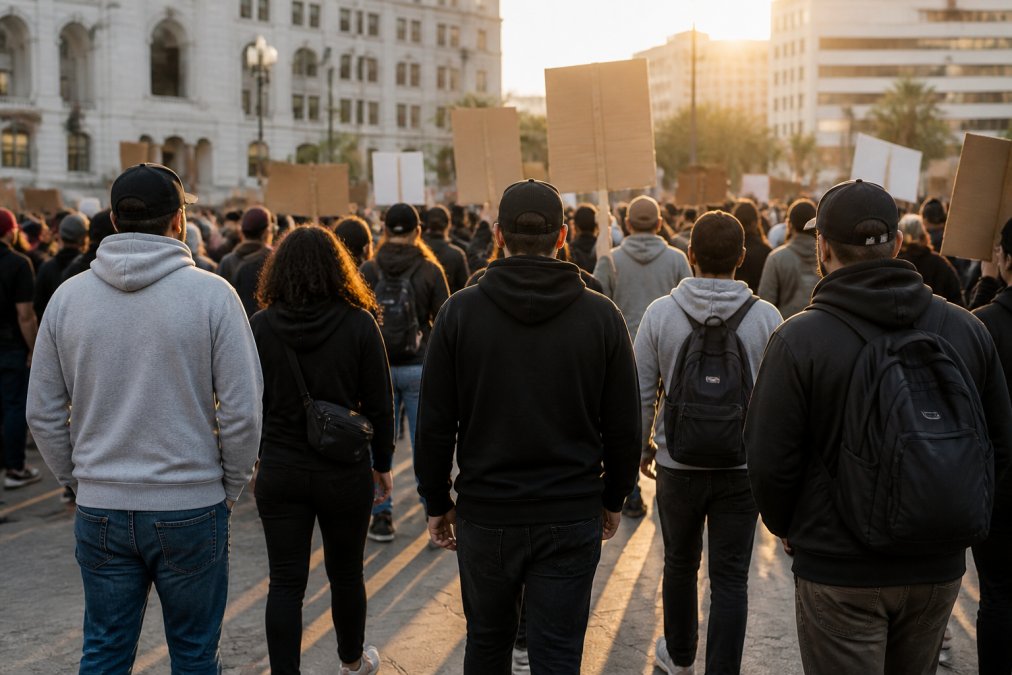
Your clothing is a canvas, and your body is the frame. The history of protest art shows that the most effective messages are the ones that are seen, remembered, and repeated. When you wear a message, you are not just protecting yourself; you are contributing to a visual archive of resistance that will inspire the next generation of activists. Vote in every election, organize in your community, and show up when it matters, because the Library of Congress collection on activism and social change documents how every major rights movement in American history depended on ordinary people willing to be seen. Wear the message, know your rights, and keep showing up, because the resistance is not a moment, it is a movement.
Your Rights Are Only Real When You Use Them
Knowing the law is the foundation, but the real work happens when you show up and refuse to be intimidated. Every protest is a practice run for the next one, so debrief with friends, share what you learned, and refine your plan. Each person who knows their rights makes the whole crowd harder to silence.
The history of protest art and public demonstration shows that change comes from sustained, organized pressure, and your presence at a march is part of that tradition. Vote in every election, organize in your community, and show up when it matters, because the Library of Congress collection on activism and social change documents how every major rights movement in American history depended on ordinary people willing to be seen. Wear the message, know your rights, and keep showing up, because the resistance is not a moment, it is a movement.
Your rights are meaningless if you never exercise them, and they are harder to take away when you understand them. At DOCVCARE THINK NOW protest apparel, we make the clothing that lets you say it without saying a word, printed on premium blanks that survive every march, every wash, and every season of this fight. Shop the resistance collection and get a hoodie, tee, or cap that carries your message into the street, the campus, and the voting booth, because the regime falls when we refuse to be silent.
Frequently Asked Questions
Can police legally search me at a protest?
Police need probable cause or a warrant to search you or your belongings. If they pat you down, they can only do so if they suspect you're armed. If officers ask to search your bag or phone, say clearly, "I do not consent to a search." Saying this out loud protects your rights for later court proceedings. Do not physically resist, but do not agree. Protecting your rights during a protest starts with knowing that consent is yours to give or withhold.
Do I have to provide identification to police during a protest?
In most states, if police reasonably suspect you committed a crime, they can ask for ID. If you are simply stopped and not under arrest, you can ask, "Am I free to go?" If yes, walk away calmly. If they detain you, giving your name is usually the safest choice. Refusing to identify yourself can lead to additional charges. Stay calm, keep your hands visible, and remember that anything you say can be used against you.
What should I do first if I am arrested at a protest?
Stay silent and stay calm. Ask for a lawyer immediately and do not answer questions without one present. You have the right to remain silent under the Fifth Amendment, and exercising it is not an admission of guilt. Do not sign anything without your attorney. Memorize your arresting officer's badge number if you can. Call a trusted contact from jail so they can arrange legal help. Getting arrested is stressful, but knowing these steps helps you protect your rights during a protest.
How can I document police interactions safely?
Use your phone's camera and record openly, but keep a safe distance. In most places, you have a First Amendment right to record police in public spaces. Do not interfere with officers or obstruct their work. If you are told to step back, comply and keep filming from further away. Store your footage in the cloud immediately so it cannot be deleted. Your recording could be critical evidence, so document dates, times, locations, and officer badge numbers in a notes app.
What should I wear to a protest to stay safe?
Wear comfortable, sturdy shoes and layers you can move in. Avoid clothing with drawstrings or hoods that officers could grab. Choose garments that let you show your message without hiding your face, since mask bans exist in some areas. A comfortable hoodie or cap with a clear slogan keeps you visible and organized. The right gear helps you stay focused on the march, not on adjusting your clothes, so you can protect your rights during a protest.